Category Archives: Miscellaneous

Posts that aren’t elsewhere…

RADICAL FAERIES IN AFRICA

global poster art by albionfaerie Hug Me

The third GLOBAL RADICAL FAERIE GATHERING is happening at a retreat centre near Cape Town in South Africa 15-24th February, 2020. Over 100 faeries from around the world will assemble at this first ever gathering in Africa, at which there will be larger numbers of African kin than at any previous faerie event.

A frontline of the GLOBAL battle for love and acceptance of LGBTIQ+ people is in Africa. African Christians condemn homosexuality as an import from western culture, completely missing the irony that it is Christianity and homophobia that are the real foreign invaders. But perhaps there is some truth in the claim that ‘homosexuality’ as a concept did not exist in pre-Christian Africa because the African people were not as limited in their thinking as to define a person by their sexuality:

homosexuality is seen very differently that it is seen in the West, in part because all sexuality is spiritually based. Taken away from its spiritual context, it becomes a source of controversy, and can be exploited. In the village, you never see gatekeepers, or anybody for that matter, displaying their sexuality or commenting on the sexuality of others…

Gatekeepers hold keys to other dimensions. They maintain a certain alignment between the spirit world and the world of the village. Without them, the gates to the other world would be shut…

Most people in the West define themselves and others by sexual orientation. This way of looking at gatekeepers will kill the spirit of the gatekeeper. Gatekeepers in the village are able to do their job simply because of strong spiritual connection, and also their ability to direct their sexual energy not to other people but to spirit.”Sobonfu Some, Dagara Tribe quoted in ‘Spirit of Intimacy’
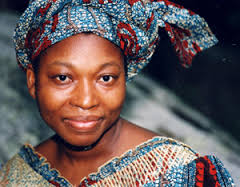
Sobonfu Some

Note the frequently recurring links between same sex love and spiritual power as the rich queer history of Africa emerges….

African history is replete with examples of both erotic and non-erotic same-sex relationships. For example, the ancient cave paintings of the San people near Guruve in Zimbabwe depict two men engaged in some form of ritual sex. During precolonial times, the “mudoko dako,” or effeminate males among the Langi of northern Uganda were treated as women and could marry men. In Buganda, one of the largest traditional kingdoms in Uganda, it was an open secret that Kabaka (king) Mwanga II, who ruled in the latter half of the 19th century, was gay.

220px-King_Mwanga_II_Buganda

The vocabulary used to describe same-sex relations in traditional languages, predating colonialism, is further proof of the existence of such relations in precolonial Africa. To name but a few, the Shangaan of southern Africa referred to same-sex relations as “inkotshane(male-wife); Basotho women in present-day Lesotho engage in socially sanctioned erotic relationships called “motsoalle” (special friend) and in the Wolof language, spoken in Senegal, homosexual men are known as “gor-digen(men-women).”

(Quoted from http://america.aljazeera.com/opinions/2014/4/homosexuality-africamuseveniugandanigeriaethiopia.html )

“The indigenous cultures of South and East Africa have a long history of homosexuality, transgender behavior, and even same-sex marriage between both men and women. In early seventeenth-century Luanda (the capital of Portuguese Angola), Catholic priests Gaspar Azevereduc and Antonius Sequerius documented third-gender natives known aschibados. The chibados dressed like women, spoke effeminately and married other men “to unite in wrongful lust with them.” More shocking to the priests was the fact that such marriages were honored and even prized among the tribesmen. In a similar record, Portuguese Jesuit Joao dos Santos wrote in 1625 that the chibados of southwestern Africa were “attyred like women, and behave themselves womanly, ashamed to be called men; are also married to men, and esteeme that unnaturale damnation an honor.” In his writings about seventeenth-century Angola, historian Antonio Cardonega mentioned that sodomy was “rampant among the people of Angola. They pursue their impudent and filthy practices dressed as women.” He also stated that the sodomites often served as powerful shamans, were highly esteemed among most Angolan tribes and commonly called “quimbanda. http://amarawilhelm.wixsite.com/around-the-world/part-8
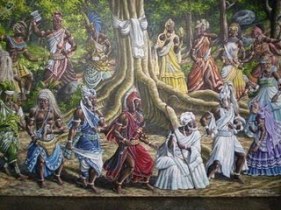
quimbanda

Dagara: The words gay and lesbian do not exist in the village, but there is the word gatekeeper. Gatekeepers are people who live a life at the edge between the worlds – the world of the village and the world of spirit….Gatekeepers hold keys to other dimensions. They maintain a certain alignment between the spirit world and the world of the village. Without them, the gates to the other world would be shut.” Sobonfu Some, The Spirit of Intimacy (2000)

The gay person is looked at primarily as a “gatekeeper.The Earth is looked at, from my tribal perspective, as a very, very delicate machine or consciousness, with high vibrational points, which certain people must be guardians of in order for the tribe to keep its continuity with the gods and with the spirits… Any person who is at this link between this world and the other world experiences a state of vibrational consciousness which is far higher, and far different, from the one that a normal person would experience. This is what makes a gay person gay. This kind of function is…one that people are said to decide on prior to being born. You decide that you will be a gatekeeper before you are born…To then limit gay people to simple sexual orientation is really the worst harm that can be done to a person.” Malidoma Some http://www.menweb.org/somegay.htm

Azande: “the Azande tribe in what is now the Democratic Republic of the Congo in sub-Saharan Africa use their queerness to instill fear and respect in the eyes of their fellow tribespeople. Lesbian Azande women were notorious for being very open and proud of their queerness, wearing it like a badge of honor. This was because, to the Azande, the spiritual potency of women was seen as often more powerful than that of men. Already at a magical disadvantage, Azande men were particularly impotent to the power of queer Azande women. By having sex with each other, lesbians of the tribe were believed to be able to double their spiritual power, making their magical prowess the most powerful in all the tribe. To show off their spiritual might, Azande lesbians sometimes practiced their queer sexuality in public as a way to let everyone know now had 2x the power they once had.” (Tomas Prower https://www.llewellyn.com/journal/article/2696)
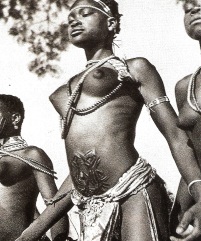
azande

In southeastern Africa, Bori cults—along with their crossdressing shamans and possession rituals—are still quite common among the Zulu. Shamans are known as inkosi ygbatfazi (“chief of the women”) while ordinary transgenders are called skesana and their masculine partners iqgenge. Zulu warriors traditionally asserted their manhood by substituting boys for women and in the 1890s, Zulu chief Nongoloza Mathebula ordered his bandit-warriors to abstain from women and take on boy-wives instead. After his capture, Nongoloza insisted that the practice had been a longstanding custom among South Africans. Indeed, homosexual marriage was documented among the Zulu, Tsonga and Mpondo migrant workers of South Africa at least since the early nineteenth century. Boy-wives were known by various names such as inkotshane (Zulu),nkhonsthana(Tsonga), tinkonkana (Mpondo)”

(Quoted from http://amarawilhelm.wixsite.com/around-the-world/part-8 )

“Apart from erotic same-sex desire, in precolonial Africa, several other activities were involved in same-sex (or what the colonialists branded “unnatural”) sexuality. For example, the Ndebele and Shona in Zimbabwe, the Azande in Sudan and Congo, the Nupe in Nigeria and the Tutsi in Rwanda and Burundi all engaged in same-sex acts for spiritual rearmament — i.e., as a source of fresh power for their territories. It was also used for ritual purposes.”

(Quoted from africamuseveniugandanigeriaethiopia.html)
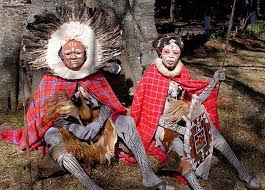
mugawe

The Meru tribes of Kenya have a religious leadership role known as mugawe, which involves priests wearing female clothing and hairstyles. In 1973, British ethnologist Rodney Needham noted that the mugawe were often homosexual and sometimes married to other men… In 1987, anthropologist Gill Shepherd reported that homosexuality was relatively common in Kenya, even among Muslims (both male and female). Most Kenyans initially discourage transgender behavior among their children but gradually come to accept it as an inherent part of the child’s spirit (roho) or nature (umbo). Shepherd observed third-gender men, known in Swahili as shoga, who served as passive male prostitutes and wore female clothing, makeup, and flowers at social events such as weddings, where they typically mingled with the “other” women. At more serious events such as funerals and prayer meetings, the shoga would stay with the men and wear men’s attire. Other Swahili terms for homosexual men include basha(dominant male), hanithi(young male partner) and mumemke (man-woman). Lesbians are known as msagaji or msago(“grinders”).”

(Quoted from http://amarawilhelm.wixsite.com/around-the-world/part-8 )

“The Konso of southern Ethiopia have no less than four words for effeminate men, one of which is sagoda and refers to men who never marry, are weak, or who wear skirts. In the mid-1960s, Canadian anthropologist Christopher Hallpike observed one Ethiopian Konso that lived by curing skins (a female occupation) and liked to play the passive role in homosexual relations. In 1957, American anthropologist Simon Messing found male transvestites among the Amhara tribes that were known as wandarwarad (male-female). They lived alone and were considered like brothers to the tribeswomen. The husbands of the women were not at all jealous of the close friendship between their wives and the wandarwarad. Messing reported that the wandarwarad were unusually sensitive and intense in their personal likings. He also found “mannish women” among the Amhara known as wandawande.”

(Quoted from http://amarawilhelm.wixsite.com/around-the-world/part-8 )
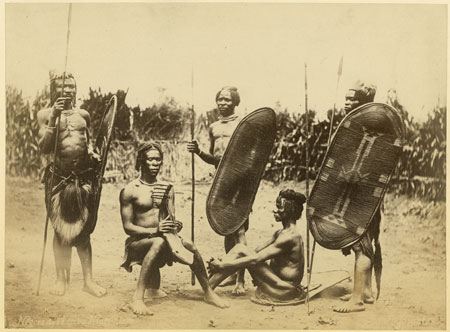
zande men

In the Sudan, traditional Zande culture is well known for its homosexual marriages, even into the 1970s, as reported by British anthropologist Edward Evans-Pritchard in 1971. Some Zande princes preferred men over women and could purchase a desired boy for the price of one spearhead. They would then become husbands to the young man, provide him with beautiful ornaments and address him as badiare (beloved).”http://amarawilhelm.wixsite.com/around-the-world/part-8

The white man exported his homophobia to the whole world, and now in the 21st century western queers are campaigning vigorously to reverse this situation. But of course once again this can feel to people in Africa and elsewhere like colonialism – the enlightened west telling the rest of the world what to do. Instead, we of the west should be going on bended knee to the peoples of Africa, apologising without end for the wanton destruction of ancient cultures, and for the spread of fear and hatred relating to sexuality.

Instead of telling Africa what to do we need to be learning from their history and their example. Just as with the example of the Two-Spirits of North America, and the ancient Goddess priest/esses of the Mediterranean world, the queer history of Africa points to an integral association of same-sex loving and transgender people with the sacred, magical, mysterious dimensions of spirit.

In this spirit, our intention at the Global Radical Faerie Gathering is to invoke healing and rejuvenation through the ancient philosophy and spirit of Ubuntu: “the universal bond of sharing that connects humanity.”
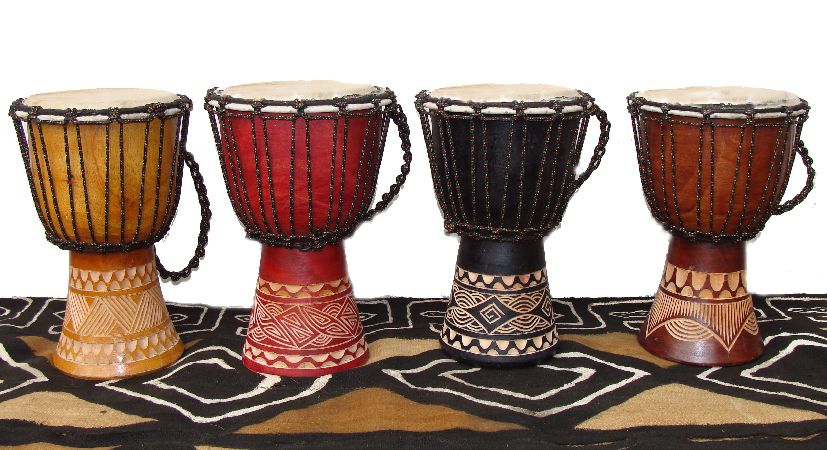
Healing Power of the Drum

“A new study published in PLoS scientifically validates what so many drum circle participants have already experienced first hand: group drumming produces significant changes in well-being, including improvements in depression, anxiety and social resilience.”http://www.greenmedinfo.com/blog/group-drumming-better-prozac-study-suggests

It was round a queer pagan fire in a field in Dorset in the year 1999 that I first experienced the expansive joy of group energy united by the drumbeat – a circle of people all revelling in the feeling of being in union, connected by rhythm and emotion and something bigger, knowing that each is having their own experience of this, would describe it in their own unique way, and this fact is perfectly wonderful.

Each human is ultimately a mystic having a relationship with their own inner divinity – and when mystics merge their energy fields, in harmony with nature’s elements,magic is the word for what happens.

Other words might include healing, revealing, seeing, knowing

Uniting the human individuality with the spirit of the drum, the rhythm, the group can loosen blocked emotional energy, clear the mental frequencies, and liberate the spirit. It can rebalance the inner world, it’s good for our mental health.

shokti

radical faeries of london samhain drum circle ancestor shrine

Allowing the energy to rise and fall

Listening is the key to tuning in

The mind naturally takes a back seat

as the heart and spirit move into the dance with the drum

The body revealed as ecstatic vehicle

of the lightbeing you are and always have been

Step into eternity

Allow the elements to restore and renew you

All life is One Dance, One Power, One Strength

Flowing through you, me, space, time and mind

In the rhythm we find our way home

Humans have always communed this way.

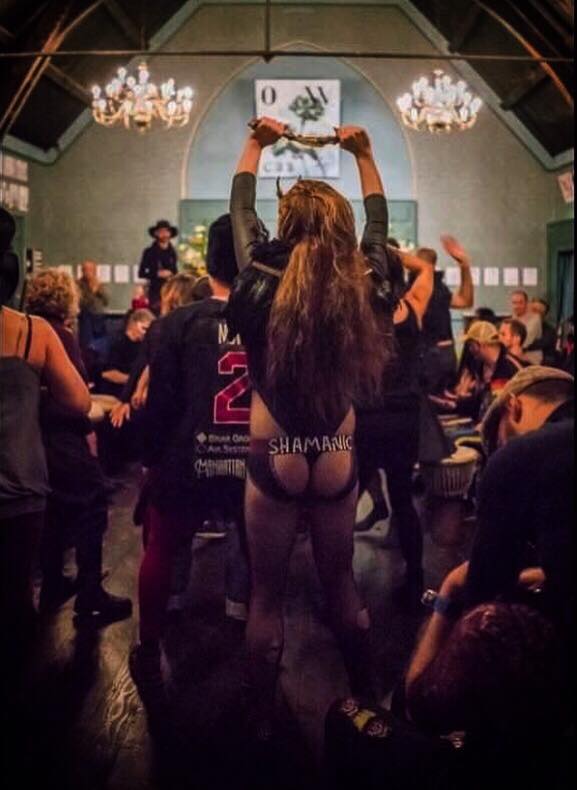
2017-12-02 – London, UK : Albion Faeries Drum Circle and Al Head Book Launch

Join the mailing list of the radical faeries of albion for news of drum circles in London and much more…. sign up on the homepage www.albionfaeries.org.uk

The Gates of SAMHAIN

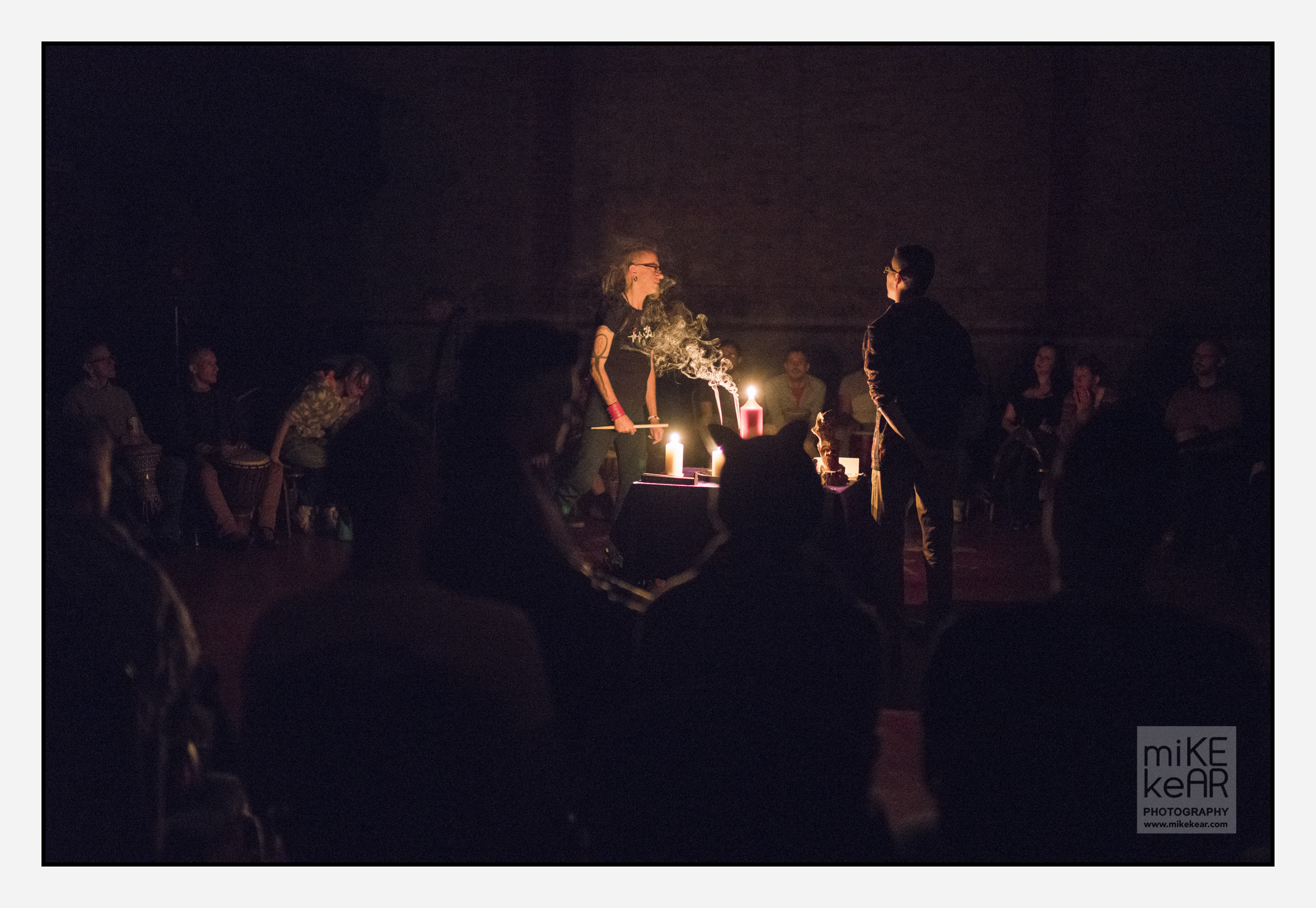
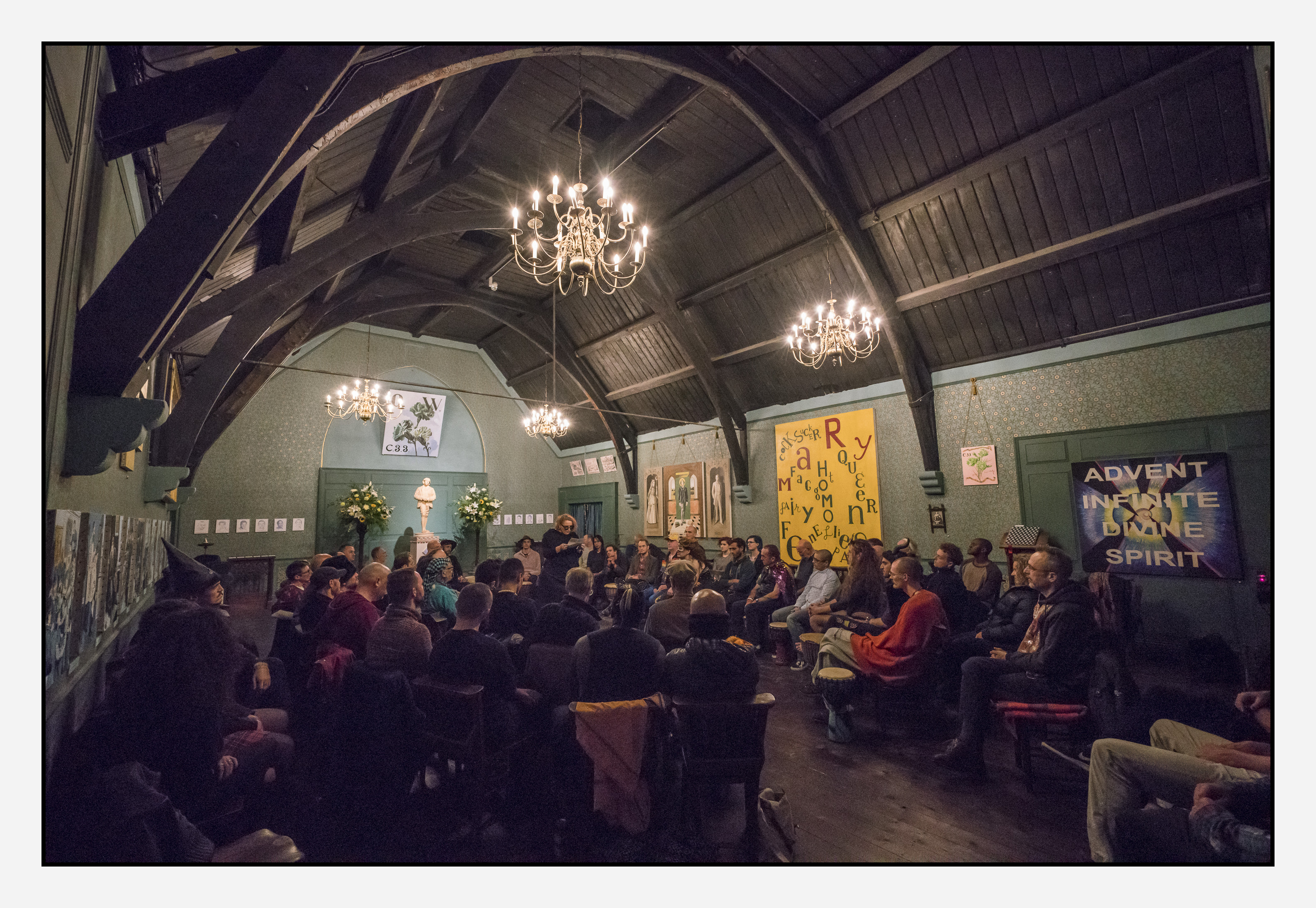
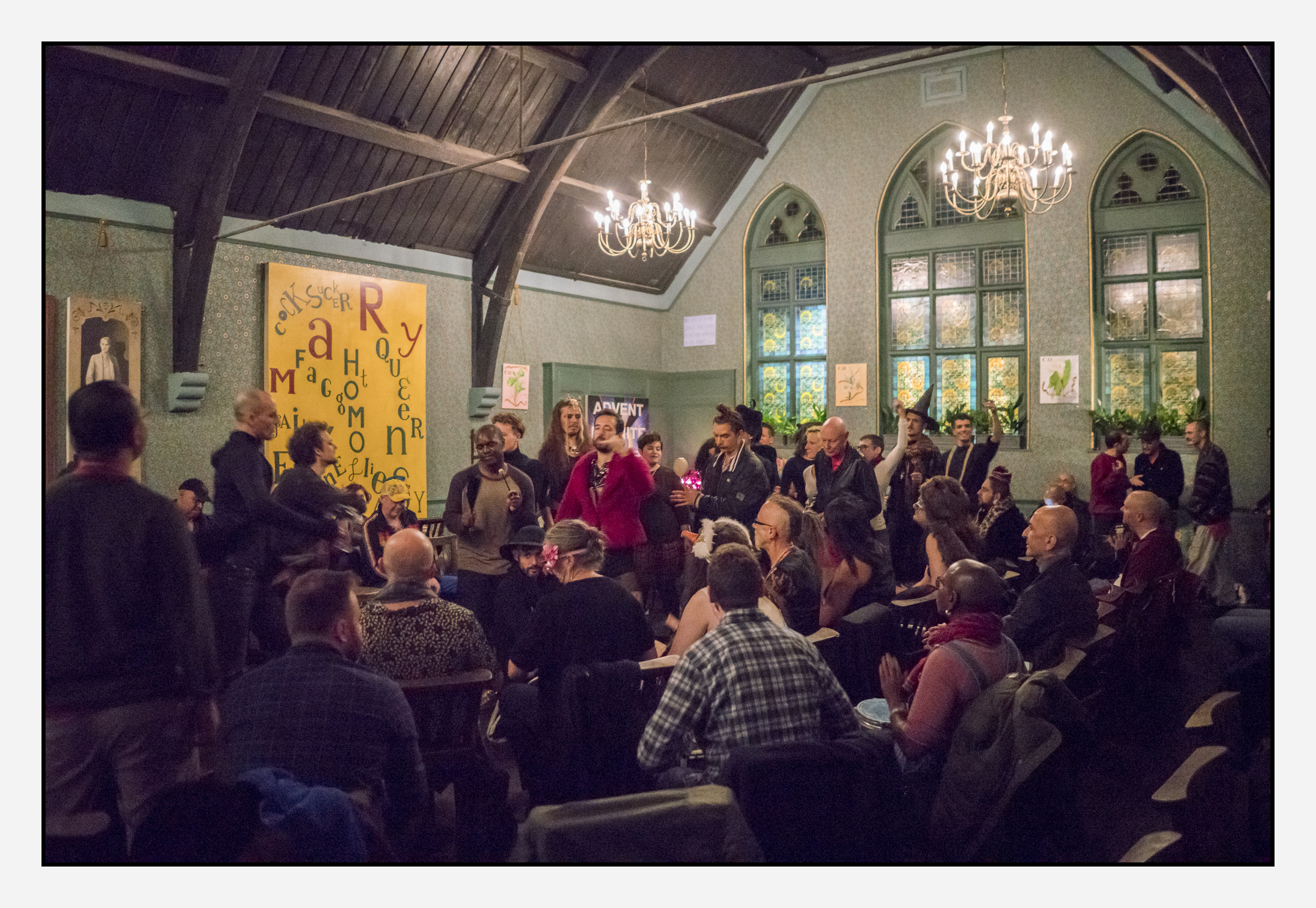
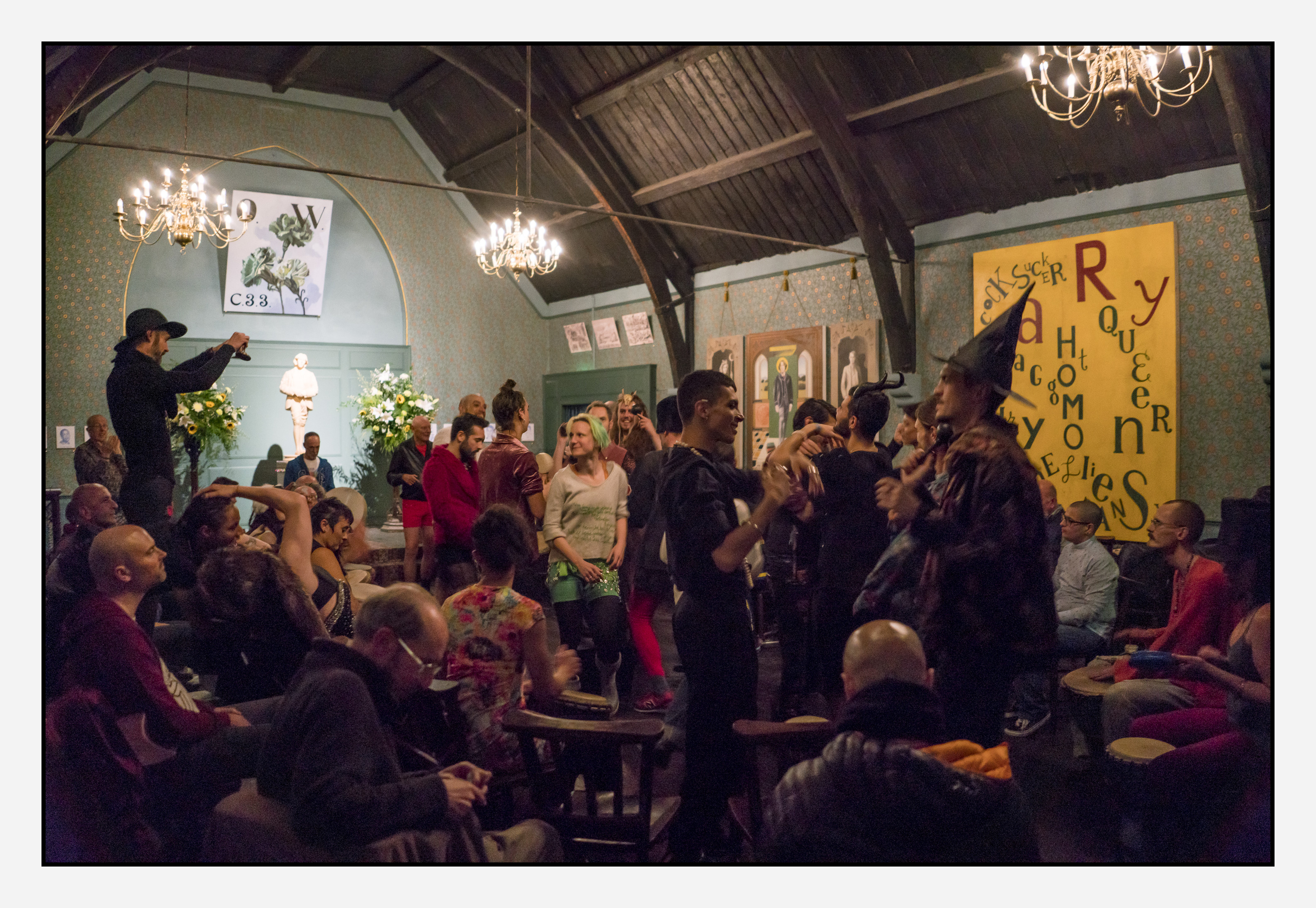
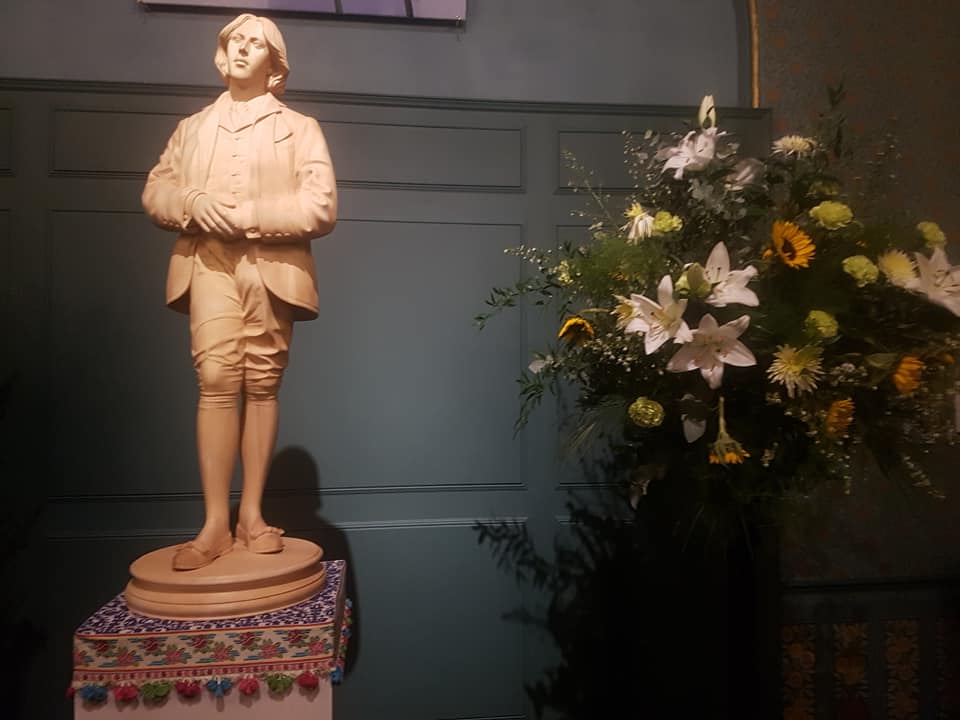
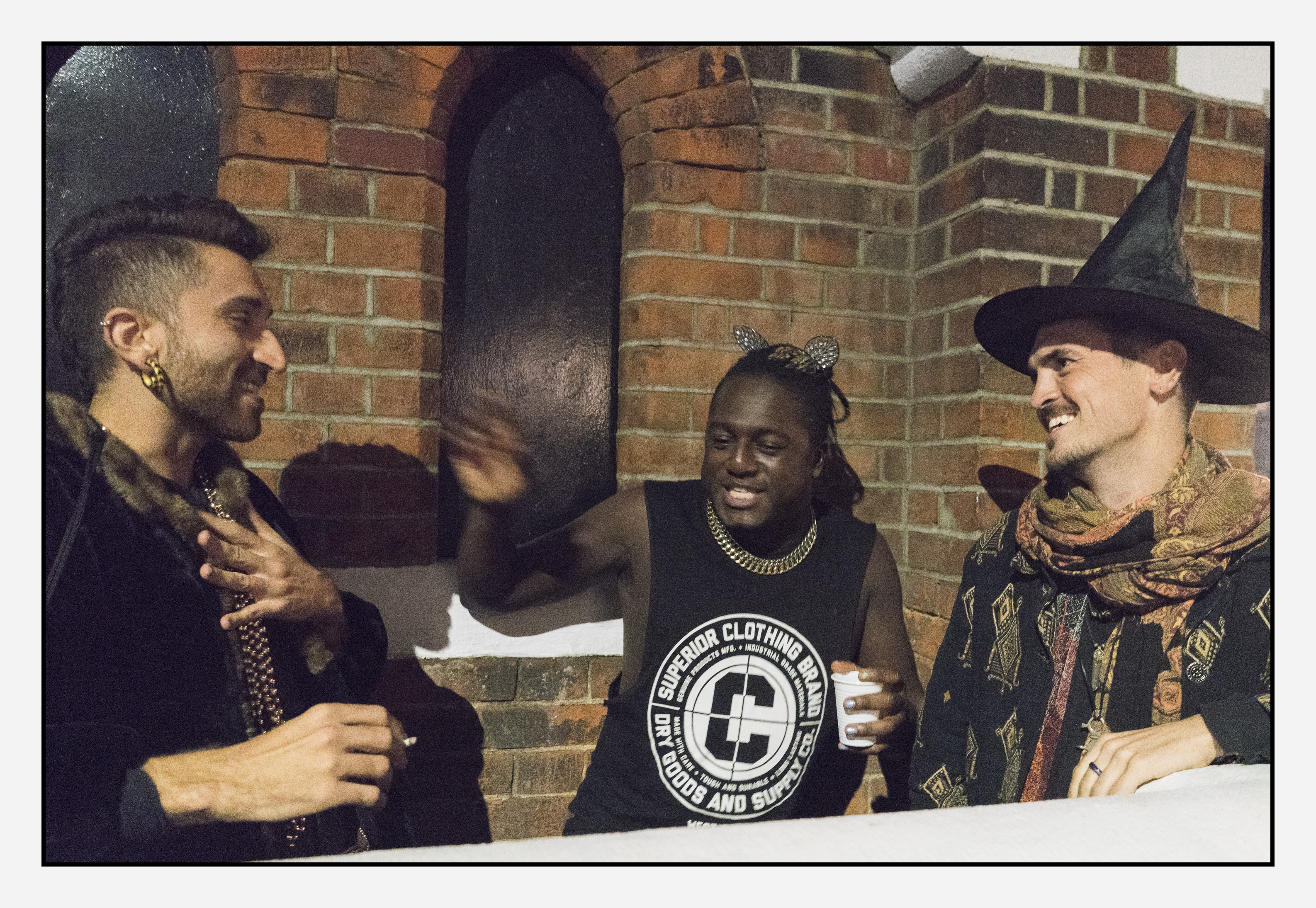
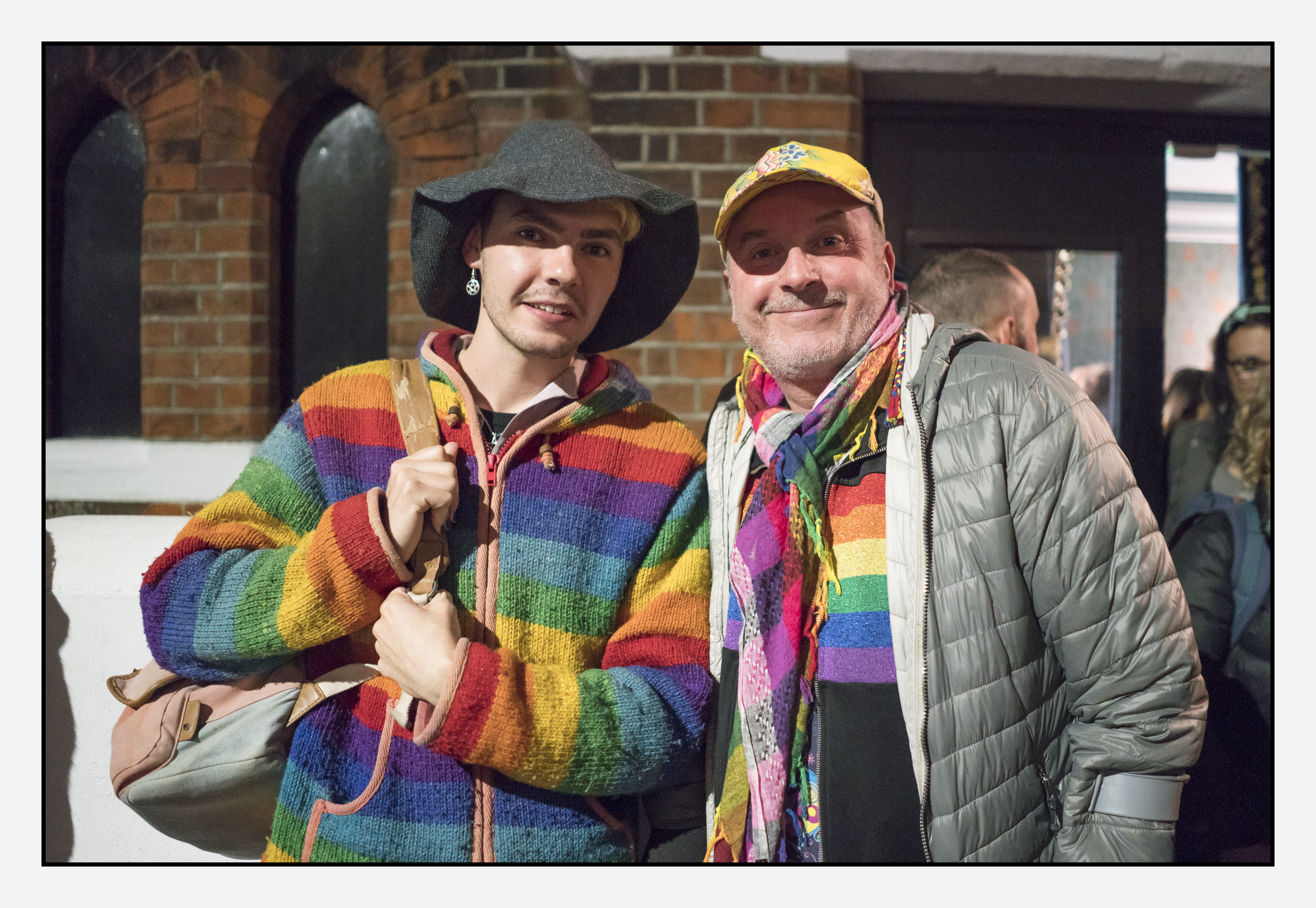
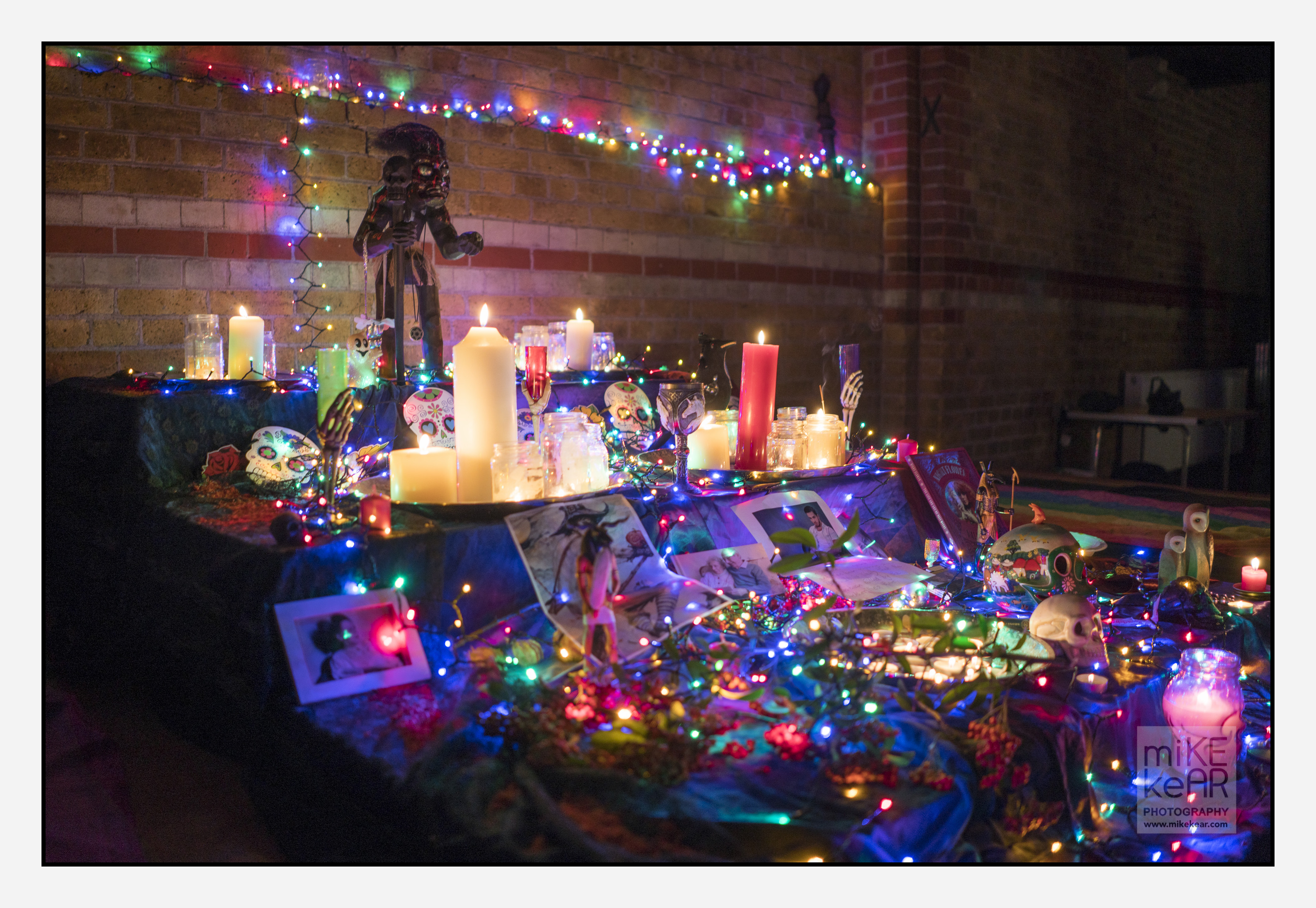
Albion Fae Samhain Circle at Oscar Wilde Temple, Clapham SW4.  Photos by Mike Kear.


SAMHAIN: the pagan new year festival of death and rebirth, when the dead are honoured and our place in the cosmic whole remembered.  Across the world so many people feel the call to mark Samhain, whether in formal ceremony or the informal celebrations of Halloween.  More ancient than any religion, this festival has deep roots in our souls, and gives us the chance to connect to them.

The veils are thin, we remember the dead, we make fun of the darkness, we celebrate the shadows and the spooks, we just know this is the witches’ time of year.

The veils are thin and we may pass through them, recall once more the ancient ways

the dance of creation, the rhythm of seasons, the power of moons, the light of the soul

and how the Goddess, through the Wheel of the Year, shows us how to be whole.


In London Queer Rad Fae witches gathered on Samhain night 31st October 2018 at the Oscar Wilde Temple in Clapham to remember our kin, honour our kind, celebrate our power and invoke the hour of our magical return as healers, teachers and soul warriors of the human race, reuniting the worlds, lifting the veils

rediscovering the Way, reinventing it for today

inviting a renewed understanding and experience of the relationship between the living and the dead

samhain2

invoking health and balance mentally – emotionally – physically by honouring all parts of ourselves:  Samhain brings a time of endings as we release the summer and old beliefs that no longer serve our wellbeing, and a chance to prepare for the more inward journey of winter

to achieve this we remember the elementals and the spirit world….

Now comes the time of year when the cosmos is inviting us to enter into a deeper relationship with dimensions beyond the physical, to let our belief in our isolated individuality die and take a journey of communion and connection to the higher self and the collective consciousness. If we step through this portal, the Gate of Samhain, we will be ready for the rising fire of the centaur spirit Sagittarius and the journey through Capricorn, Aquarius and Pisces months, taking us through to the Spring and giving meaning and depth to our experience of Winter.

blog by Shokti

“The Commodity of Youth in an Age of Austerity by Cunty” : A Response

Radical Faerie tribal space is a cutting edge of queer consciousness, where the spirit of community, something often lamented as a lost utopia by the mainstream gay scene, is deeply dived into and explored. Queers are a section of humanity daring to declare our love after centuries of repression, we carry many wounds in our collective and individual psyche, and of course those come with us into our tribal adventures, and can manifest as unconscious behaviours. But it is through these adventures that those wounds get healed and behaviours, along with beliefs (about ourselves and the world) change.

Cunty has highlighted one of those behaviours in their recent blog post. The title hits me like a misthrown brick and i will admit triggered a place of tension within me before i even started reading the body of the text. Linking ‘commodity of youth’ and ‘age of austerity’ feels strange.  Youth can be a commodity in any age, and the British government’s imposition of austerity measures since 2010 has precious little connection to anything faeries do. In fact, albionfaerie space has experienced increasing abundance in the past eight years, with rapidly increasing numbers of people involved, many new gatherings emerging and increasing gender and racial diversity (we’ve always had good multi-generational attendance).

Cunty starts by naming the act of comparing oneself to others, or objectifying people in the community, as a ‘trap’. This might be coming from some sort of protestant mindset? How about you be more forgiving with yourself and others Princess? Comparing ourselves to others is a normal behaviour, so is objectification – these things go on all the time in the outside world, so we can hardly expect them to just fall away once we enter the faerie gates. But yes i agree it is important to be vigilant with one’s own mind, and throw out unhelpful thoughts that arise – such as thoughts of being lesser (or greater) than others, projections about what an other person ‘is like’, but it is not a sin to have these thoughts. They are part of the human experience, the point is to rise above them and gradually get in place a more holistic perspective. The ‘trap’ I suppose is to believe them.

Cunty points out that they do not seek to blame or judge, though the fact they feel they need to say this sets off my alarm bells. Possibly this claim is there to deflect from the fact that the article is dripping in blame and judgement. He singles out ‘middle-aged white cis gay men’ as the commodifiers of youth, but actually i think people of all ages, genders, races and sexualities do so. He says some of us base our self-worth on how many pretty young things we have around us. I can not agree with this, i have not seen this behaviour in faerie space ever.

Cunty asks what happened to the idea of subject:SUBJECT consciousness? I would prefer to hear a rallying call to explore what the fuck that means (because many are puzzled i know) rather than a judgement that others are not engaging it. When Cunty writes of observing an older faerie across the room putting his hand on a younger faerie’s knee please note Cunty is quite openly sharing the imagined projection from his own head, not what he hears, though the impression of the creepiness conveyed is what stays with the reader.

The use of woo as a tool of seduction is condemned, and probably rightly so, however this is not a technique exclusively used by older faeries. In fact the younger fae are in my observations much better at this! Even the sharing of astrological wisdom is apparently a ploy to ‘entrap the unwary’. Well i am happy to say i don’t see many ‘unwary’ faeries, quite the opposite – this is a tribal space for warriors. The applauding of sexy young faeries is criticised as feeding the abusive cultural energy we bring from the outside, but I believe I see applause and appreciation directed at all faeries of all ages.

I am not writing this response to deny that the behaviours described by Cunty ever happen. I just don’t much care for how Cunty is presenting their thoughts. While acknowledging that some older guys have stuff to learn about being in community with younger, let’s also acknowledge that everybody who comes to faerie space has things to learn, behaviours to appraise, attitudes to evolve.

I witness young guys jumping into lusty, passionate embraces with each other, only for one to realise they went too far too fast, pulling back, sometimes hurtfully. This particularly can happen when a guy (of any age) who has been a faerie for a short while wants to welcome a newbie into the fold, but then doesn’t want to follow through and deepen the friendship after the initial lust is expressed. What I will say in favour of older faeries is they usually will continue to offer unconditional love and seek to grow friendship to younger faeries after the initial connection is made, whether that connection expressed sexually or not.

Unfortunately, I believe I have seen older faeries ignoring each other, finding the younger faeries more interesting or appealing, and i have wished the older guys would be more playful with each other. I have also seen this wish come true.

And this: as an older, experienced faerie, who now enjoys many loving relationships with faeries of all ages, I believe I can help others realise that we can enjoy powerful states of loving, sometimes erotic, connection with others – but still remain integral within oneself, not lose our wholeness, our independence, not lose our balance through being in states of heightened love with others. But also acknowledging that sex and love open up our vulnerabilities, which then in turn make possible the deep magic we create.

But when it comes down to it, I am completely in accord with most of Cunty’s conclusions:

Intergenerational space: at the Ostara gathering this year we had an elders and youngers heart circle, was one of the highlights and shows how much there is to explore and discover here.

Spending time with older faeries: yes yes yes what a gift it is to have a queer community space where intergenerational friendship and relationships are possible.

Issues of consent and sexual health: these are responsibilities that each of us need to be real about, all have a need to step up to, and always have had. It’s important to state it.

Cunty appeals to us to get back to our core tool, the heart circle – where we listen to each other. I don’t agree: we have nothing to get back to, because we have never left it. Heart Circle is and always will be the engine of faerie space. At Ostara, heart circles formed the centre of the programme, for example. With such a large community now we don’t all get to sit and listen to each other as much as would be ideal. But at least we have blog pages to share what we need to get off our chests!

So I needed to get this off my chest. I do not object to Cunty bringing up this subject, but as i have described, i bristle at what i perceive as projections in the view expressed. But i do heartily agree with the conclusions, though instead of ‘arguing’ that we ‘have a responsibility to ourselves and each other, to nurture and protect our tribe’ I would prefer to celebrate that we have the opportunity to create such a space of magic, wonder and self-discovery, and to exercise the greatest compassion possible, for ourselves and each other, as we will all make mistakes during this transition from the mindsets of the outside world into the subjectivity of queer community.